Top Flutter Tools & Libraries in 2026
Flutter in 2026 is more than a framework — it's a full ecosystem. Discover the most powerful tools and libraries every developer should use to build scalable, high-performance, and future-ready apps.

Flutter is no longer just a UI toolkit.
In 2026, it has evolved into a complete development ecosystem — powering mobile, web, desktop, and even embedded applications from a single codebase.
But here’s the reality:
The strength of Flutter today is not just the framework — it's the ecosystem around it.
Let’s explore the top Flutter tools and libraries in 2026 that are shaping modern app development.
State Management is No Longer Optional
Every scalable Flutter app starts with the right state management.
The ecosystem has clearly matured, and a few tools are leading the way:
- Riverpod → The modern default (safe, scalable, testable)
- BLoC → Still dominant in enterprise-grade apps
- Signals → Rising fast with reactive performance
We’ve moved from “just make it work” to:
Predictable → Maintainable → Scalable state architecture
API Handling is Now About Architecture
Connecting APIs is easy.
Maintaining them at scale is not.
That’s why developers are moving towards structured networking layers:
- Dio → Advanced HTTP client with interceptors & logging
- Retrofit → Clean, generated API layers
This shift reduces boilerplate and improves long-term maintainability.
Clean Code with Code Generation
Manual model writing is slowly disappearing.
Modern Flutter apps rely heavily on code generation:
- Freezed → Immutable models & sealed classes
- json_serializable → Automatic JSON parsing
The goal is simple:
Less manual code → Fewer bugs → Better scalability
Navigation Has Become Declarative
Navigation is no longer just pushing screens.
In 2026, it’s about structured routing systems:
- GoRouter → Official, simple, deep-link ready
- AutoRoute → Type-safe and scalable
Modern apps now treat navigation as part of architecture — not an afterthought.
UI Development is Faster Than Ever
Design consistency and speed are critical.
That’s where UI libraries come in:
- GetWidget (GF) → Huge collection of ready-to-use components
- Flutter Hooks → Cleaner and more reusable UI logic
Teams are now building design systems, not just screens.
Dev Tools Are Doing the Heavy Lifting
Development is no longer just coding.
Automation is now a core part of the workflow:
- Codemagic → CI/CD built specifically for Flutter
- FlutterFlow → Low-code builder for rapid MVPs
This means:
Faster builds → Faster testing → Faster releases
Flutter is Expanding Beyond Apps
Flutter is entering new territories.
One of the most exciting areas:
- Flame Engine → Lightweight 2D game development
This shows Flutter is not just for apps anymore — it’s becoming a multi-domain framework.
The Future is Already Here
The next wave of Flutter is being shaped by:
- AI Integration → Smarter apps with automation & personalization
- Impeller Engine → Better graphics performance
- WebAssembly (Wasm) → Faster web execution
Flutter is moving toward:
High performance + Cross-platform + AI-native experiences
Final Thought
The biggest shift in Flutter is not just new tools.
It’s the mindset.
We’ve moved from:
- Building apps
To:
- Building scalable, intelligent, cross-platform systems
And the developers who understand this shift early…
Will lead the next generation of app development.
Share this article
Related Articles
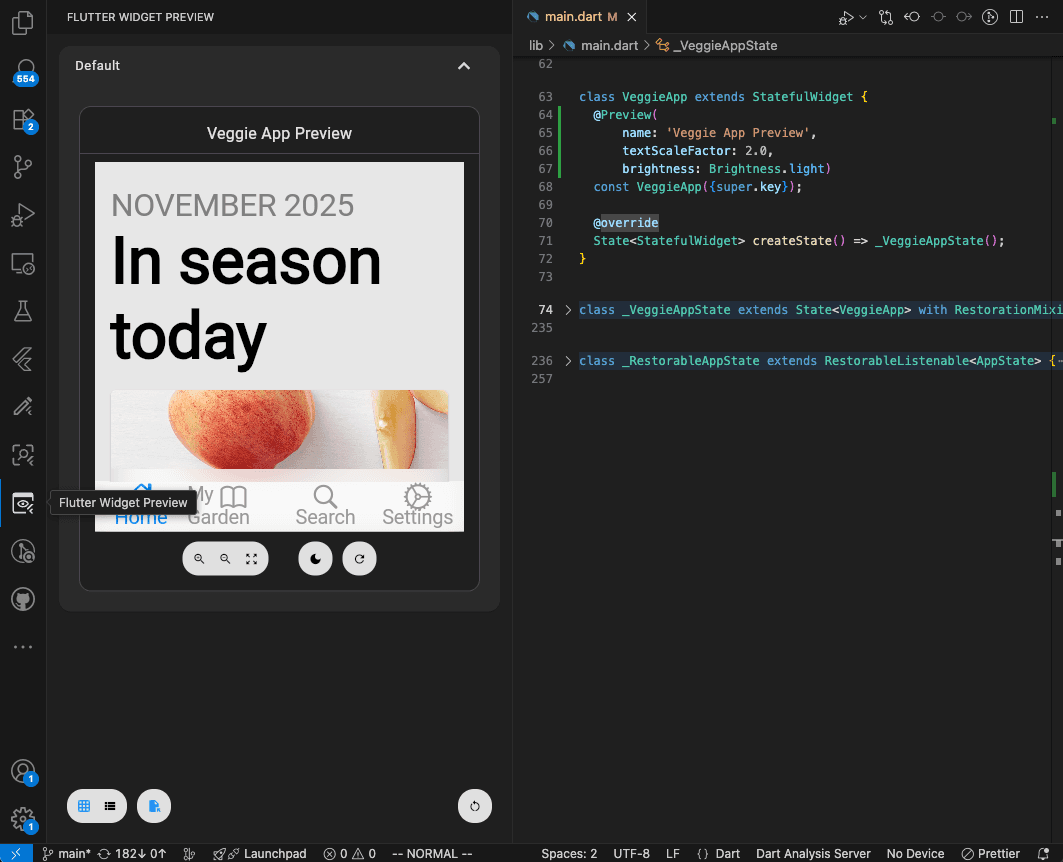
Flutter Widget Previews: Build Your First UI Component Without Opening the Whole App
Learn Flutter Widget Previews with a simple reminder card, official screenshots, and practical exercises for checking layouts and larger text.
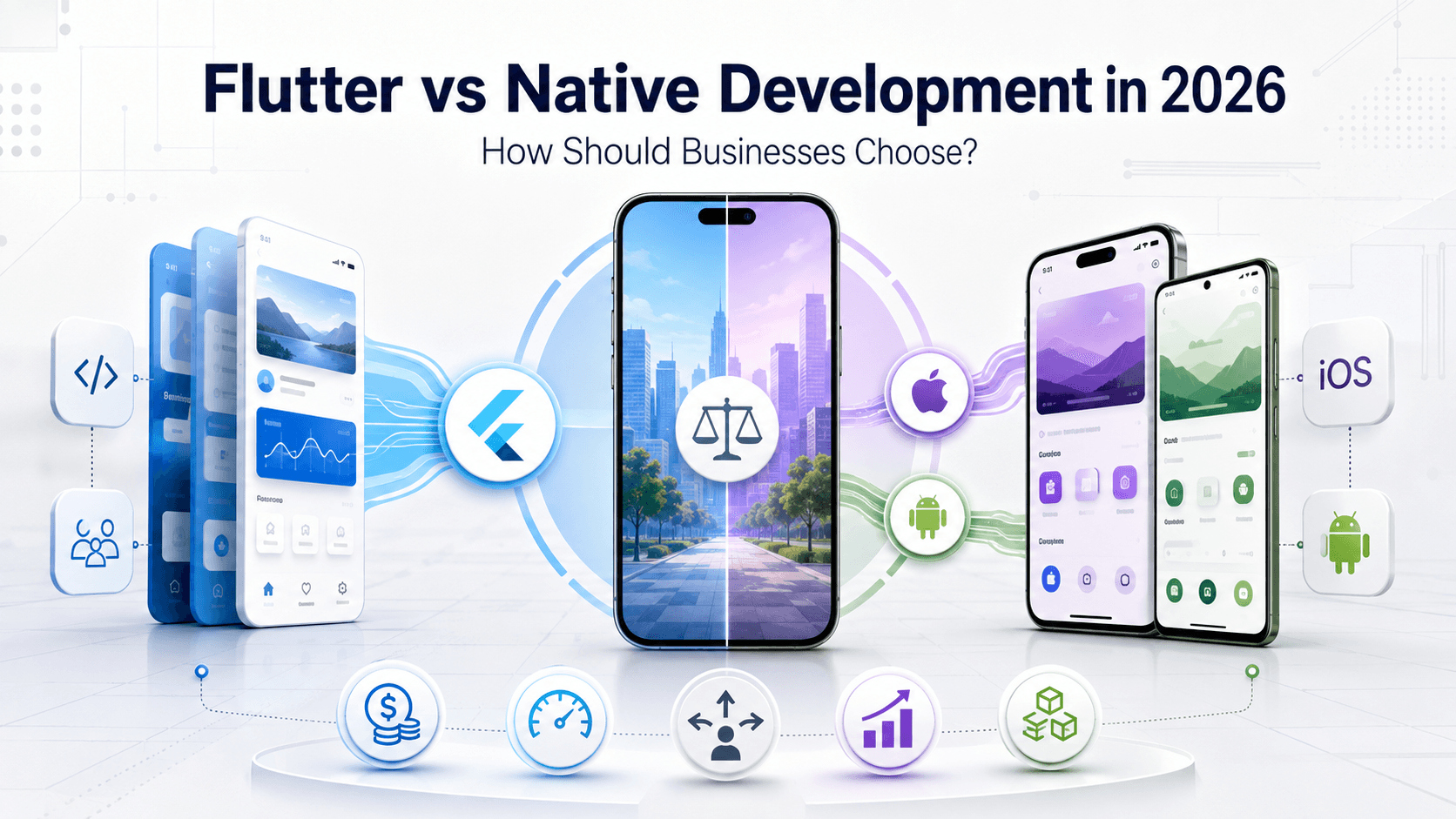
Flutter vs Native Development in 2026: How Should Businesses Choose?
A comprehensive, data-backed architectural guide comparing Flutter and Native (Swift & Kotlin) mobile development — covering cost, market share, performance, team velocity, real-world enterprise case studies, and a step-by-step decision framework.
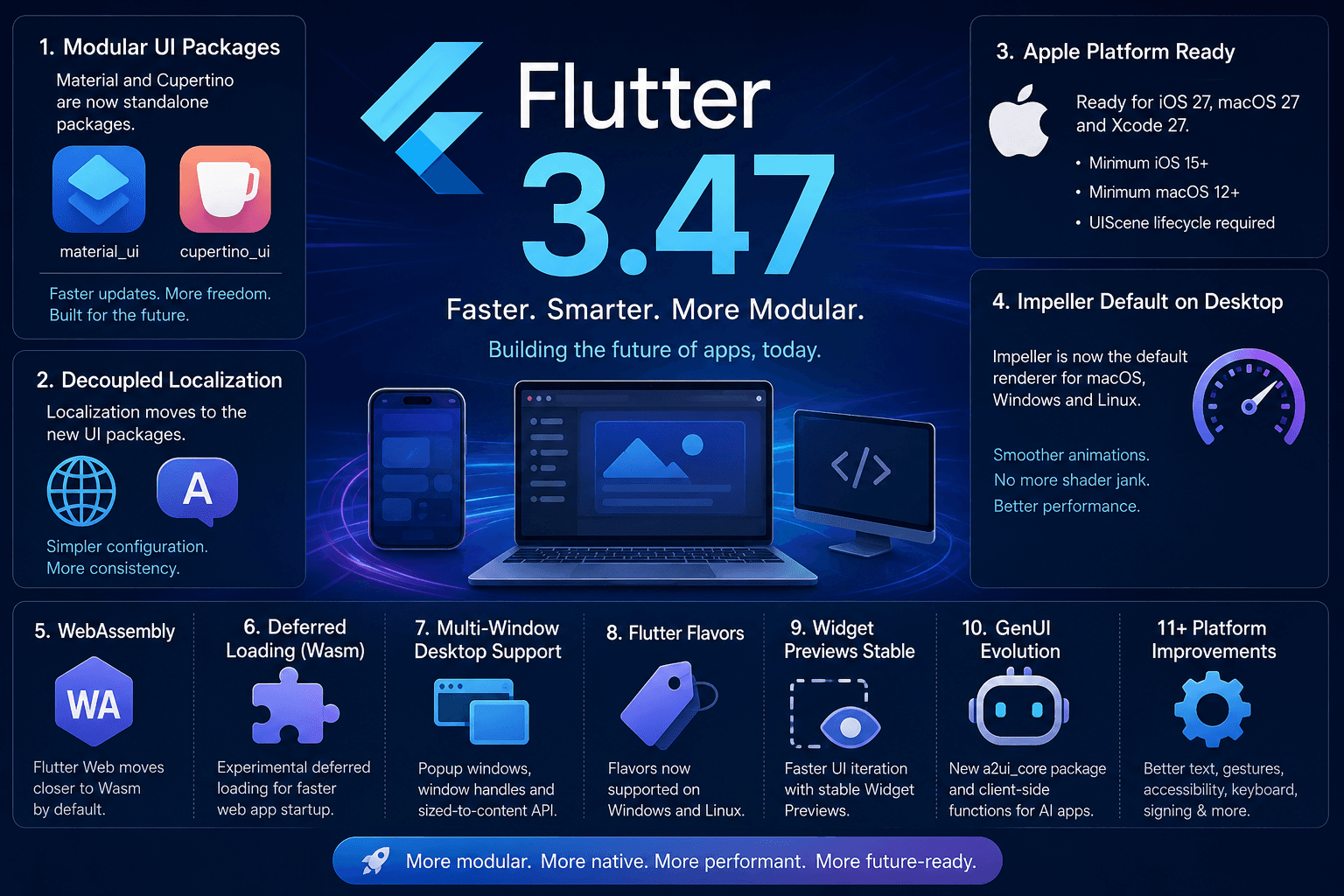
Flutter 3.47: A Major Step Toward a More Modular, Faster, and Future-Ready Framework
Flutter 3.47 introduces standalone Material and Cupertino UI packages, default Impeller renderer on desktop, mandatory UIScene for iOS 27, Wasm deferred loading, Widget Previews, and GenUI evolution.