ChatGPT Ads vs Google Ads vs Meta Ads: Which Is Best for Businesses?
Compare ChatGPT Ads, Google Ads and Meta Ads: 2025 advertising revenue, 2026 market-share forecasts, customer intent, AI advertising and business measurement.
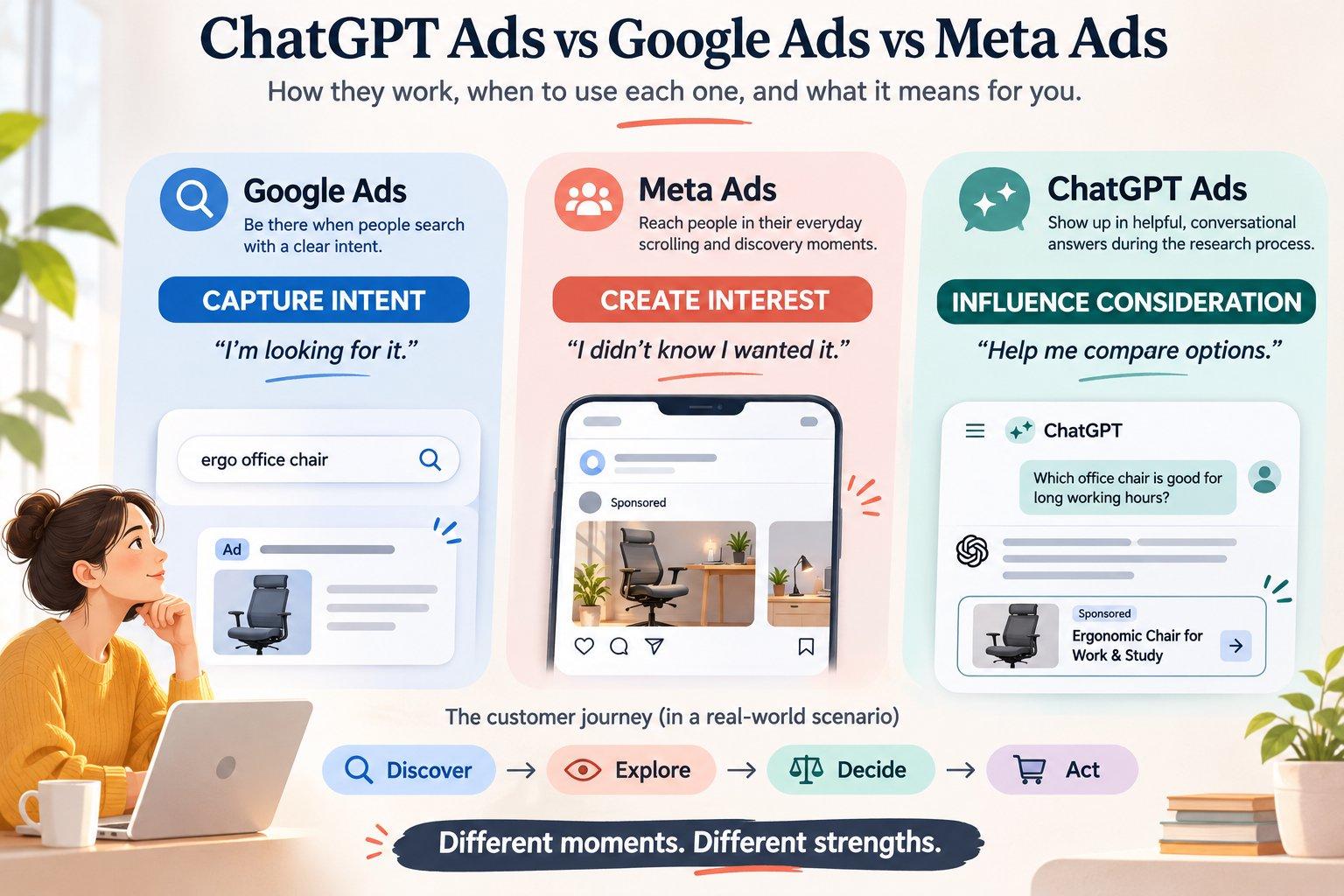
ChatGPT Ads vs Google Ads vs Meta Ads: Who Will Win the Next Advertising Battle?
Quick answer: Google Ads is especially useful for capturing existing search demand, Meta Ads is strong for visual discovery and awareness, and ChatGPT Ads creates an emerging opportunity to reach people during conversational research. There is no universal winner: businesses should compare qualified leads, customer acquisition cost, revenue and profit—not clicks alone. ChatGPT Ads is a newer channel and its long-term performance should be judged using real campaign data.
In this guide: We compare the platforms' advertising models, published revenue figures, market-share forecasts, customer journeys, AI capabilities and practical measurement. The revenue figures are historical company-reported results; the 2026 market-share figures are forecasts, not final audited outcomes.
Three platforms. Three different ways to reach customers. One big question: which one actually delivers results? Imagine you are planning to buy a new laptop.
You open Google and search for the best laptop under ₹70,000.
Later, while scrolling Instagram, you see a video showing a laptop with an impressive display and battery life.
Then you ask ChatGPT:
"I'm a software developer. I need a laptop for coding, multitasking and occasional video editing. Which specifications should I look for within my budget?"
Three platforms. One buying decision. Three very different experiences.
This is where digital advertising is becoming interesting.
For years, Google helped businesses reach people who were actively searching. Meta helped brands reach people through social discovery. Now, ChatGPT is introducing advertising into a conversational environment where people ask questions, explore possibilities and compare options.
But does this make ChatGPT Ads the next big thing?
Will Google lose its dominance? Can Meta maintain its position? And, most importantly, which platform should a business invest in?
Let's look beyond the hype, understand the numbers, and explore what this change means for businesses and customers.
First, understand the three different advertising moments
Before comparing performance, we need to understand the customer's mindset.
Google Ads: "I am looking for it."
A customer searches for a product, service or solution. Google can place relevant sponsored results alongside organic search results.
Meta Ads: "I discovered something interesting."
A customer is scrolling through Facebook or Instagram. A video, image or story introduces a product they might not have considered before.
ChatGPT Ads: "Help me understand what I need."
A customer asks questions, explains their requirements and explores possible solutions. A relevant sponsored placement may introduce a business during that process.
These are simplified descriptions, not strict rules. All three platforms can support awareness, research and conversion campaigns.
But the distinction gives us a useful starting point:
- Google is particularly strong at capturing existing demand.
- Meta is particularly strong at creating awareness and interest.
- ChatGPT has an emerging opportunity to participate in research and consideration. The important shift is that advertising is no longer limited to search results or social feeds. It is beginning to enter conversational discovery too.
The numbers: How big are Google and Meta?
Let's step away from opinions and look at reported advertising revenue.
Google and Meta have spent years building enormous advertising businesses. Their financial results give us a sense of their scale.
The following figures are company-reported worldwide advertising revenue, in US dollars.
| Year | Google advertising revenue | Meta advertising revenue |
|---|---|---|
| 2023 | $237.9 billion | $131.9 billion |
| 2024 | $264.6 billion | $160.6 billion |
| 2025 | $294.7 billion | $196.2 billion |
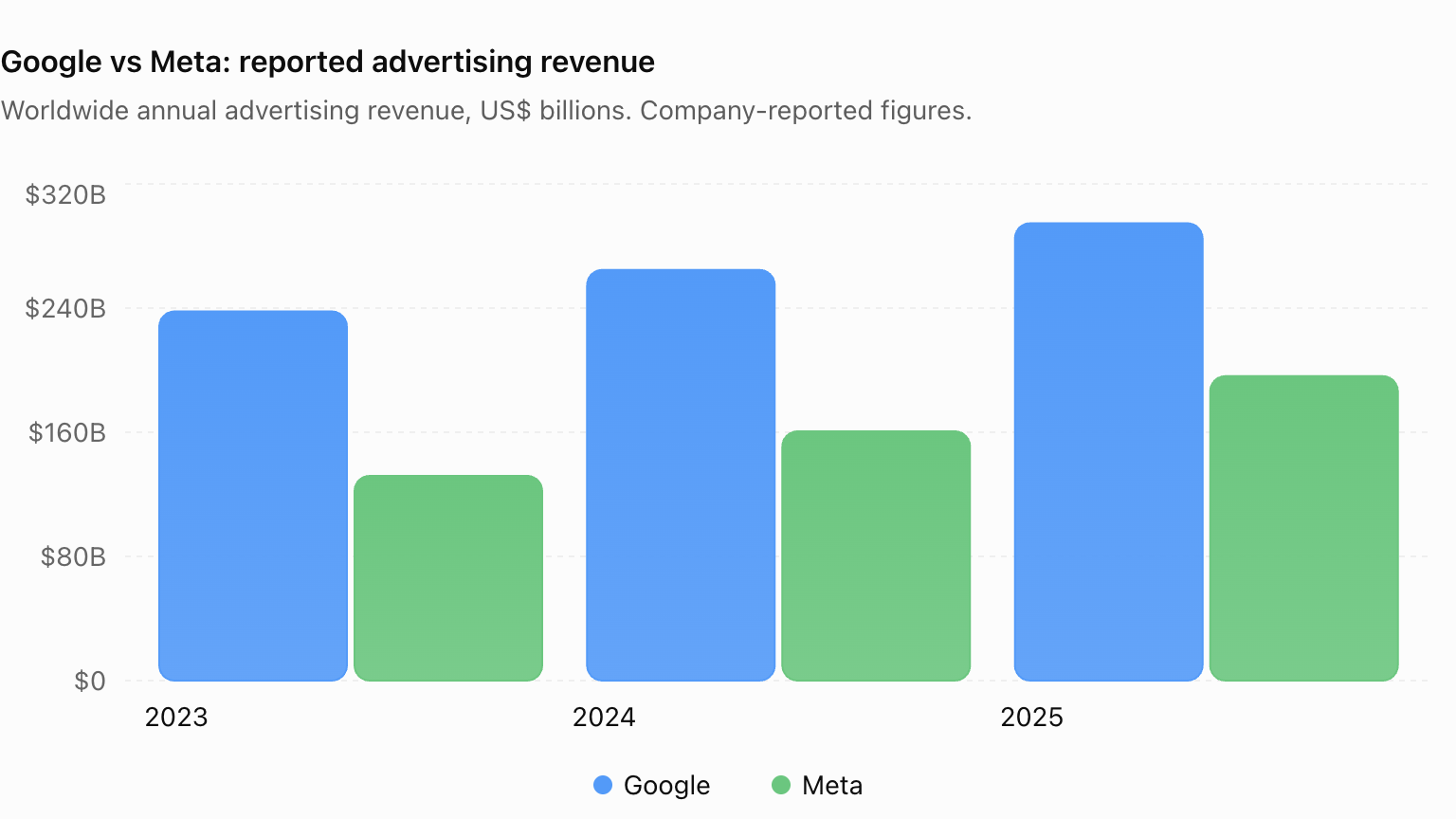
Figure 1. Company-reported annual advertising revenue, US$ billions.
Both businesses have continued to grow. The 2023–2025 figures above match the companies’ reported advertising revenue in their annual filings: Alphabet’s 2025 Form 10-K and Meta’s 2025 Form 10-K.
Google's advertising revenue increased from approximately $237.9 billion in 2023 to $294.7 billion in 2025.
Meta's advertising revenue grew from approximately $131.9 billion to $196.2 billion over the same period.
That is significant growth for two already massive advertising businesses.
But there is an interesting development: Meta's growth rate has been stronger over this period, narrowing the revenue gap.
What does this tell us?
Google remains a major advertising powerhouse, while Meta is becoming an increasingly formidable competitor in digital advertising.
And then there is ChatGPT.
Its advertising business is much younger. It would be misleading to compare its current advertising revenue with businesses that have been monetizing advertising for years.
That is why we should examine ChatGPT's opportunity differently: through its audience, advertising environment, product development and potential role in the customer journey.
Market share: Who controls the advertising market?
Revenue tells us how much money a company generates. Market share tells us how much of the market it represents.
According to an April 13, 2026 eMarketer forecast, Meta is expected to overtake Google in worldwide net digital advertising revenue in 2026.
The forecast estimates:
- Meta: 26.8% of worldwide digital advertising spend.
- Google: 26.4% of worldwide digital advertising spend. These are forecasts, not final audited market-share results.
The important point is that the competition between the two established advertising giants is becoming closer.
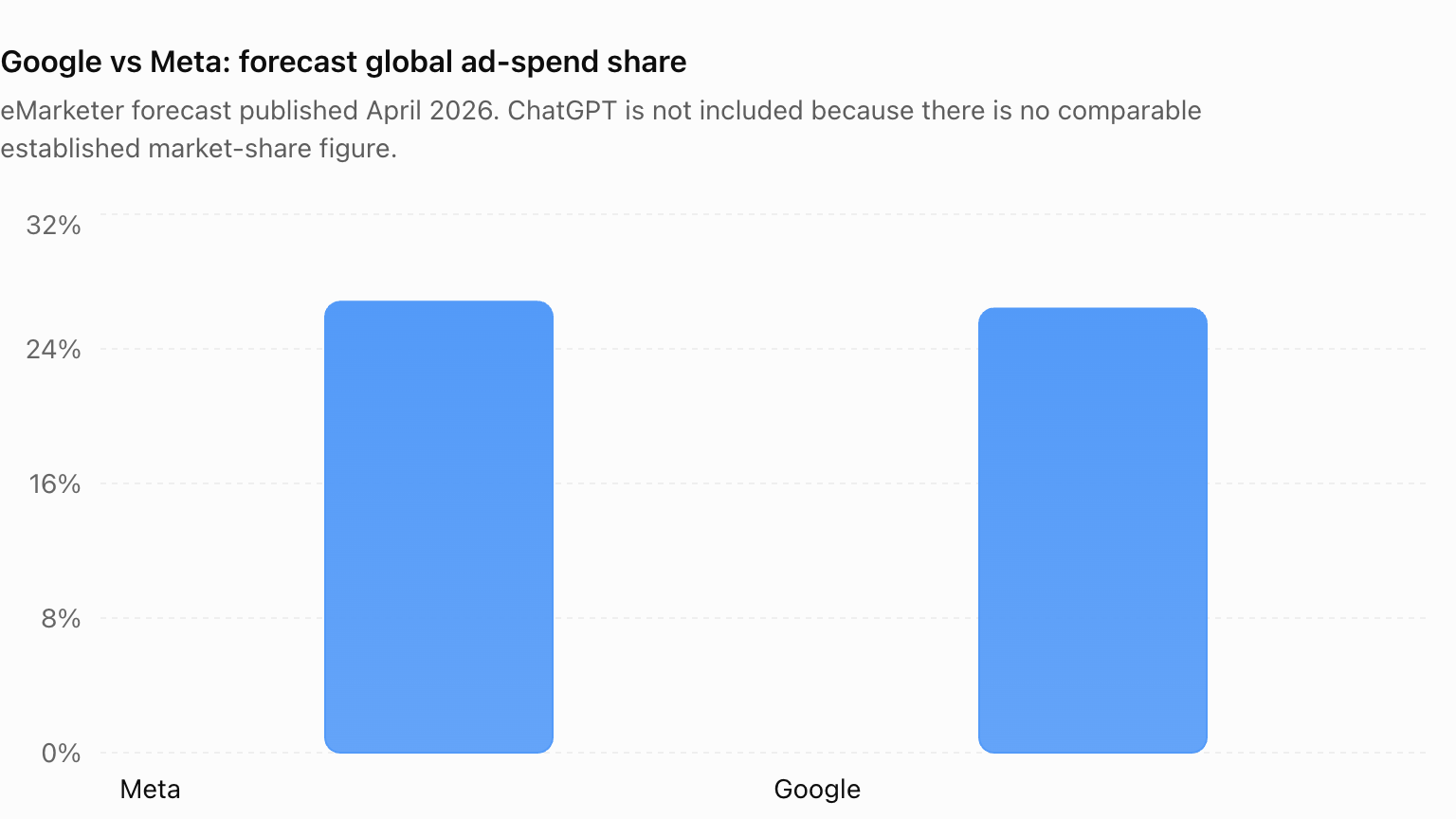
Figure 2. April 2026 eMarketer forecast; projections, not audited final market-share figures.
What about ChatGPT?
There is no directly comparable, established global advertising-market-share figure for ChatGPT that can responsibly be placed alongside these percentages.
ChatGPT's advertising business is still developing. We should not assign it a percentage simply to complete a three-way chart.
That missing number is itself an important part of the story: the new entrant has an interesting opportunity, but it has not yet demonstrated the scale of the established advertising giants.
How do advertisements actually look on each platform?
Numbers explain scale. The actual advertising experience explains how each platform reaches people.
Google Ads: The sponsored search result
A person searches:
"Best ergonomic office chair for long working hours."
They may see a sponsored search result with:
- Business name.
- Product or service headline.
- Description.
- Website link.
- Relevant extensions or additional information. The customer has already expressed interest through the search.
The advertisement competes for attention at the moment of intent.
Meta Ads: The sponsored social experience
A person is scrolling Instagram.
They see a short video showing an office chair being adjusted for posture, comfort and long working hours.
The advertisement might contain:
- Product images or video.
- A lifestyle demonstration.
- Customer testimonials.
- An offer.
- A call-to-action such as Shop Now. The customer may not have been looking for an office chair five seconds earlier.
The advertisement creates a reason to explore.
ChatGPT Ads: The sponsored conversational placement
A person asks:
"What should I look for when choosing an ergonomic chair for eight hours of daily work?"
ChatGPT can help explain the relevant features and considerations.
A clearly labelled sponsored placement may introduce a relevant business or product in the advertising experience.
There is an important distinction here: advertisements are separate from ChatGPT's answers. OpenAI says advertising does not influence the answers ChatGPT provides.
A sponsored placement is not an endorsement or an organic recommendation.
This distinction is essential if conversational advertising is going to earn customer trust.
A real-world style business story: One business, three advertising strategies
Let's imagine Ananya.
She runs an online business selling ergonomic office furniture.
Her products include office chairs, standing desks and workspace accessories.
She has a monthly advertising budget of ₹1,50,000.
Her objective is simple: generate profitable sales, not just website traffic.
Instead of choosing a platform based on popularity, she examines how customers discover her products.
Campaign one: Google Ads
Ananya targets searches such as:
- Ergonomic chair under ₹15,000.
- Best office chair for back support.
- Buy adjustable office chair online. These searches can reveal a relatively clear requirement.
Her advertisements direct customers to relevant product pages.
She focuses on search relevance, product details, pricing, landing-page experience and conversion tracking.
Campaign two: Meta Ads
She creates short videos demonstrating:
- How to adjust an office chair.
- What makes a chair comfortable for long working hours.
- The difference between basic and ergonomic chairs.
- How to create a better home-office setup. She tests different videos, audiences and messages.
Some people click immediately. Others save the video, visit later or become interested in another product.
Her challenge is to turn attention into genuine buying interest.
Campaign three: ChatGPT Ads
Now imagine a customer researching a home-office setup.
They ask questions about comfort, workspace size, budget and product features.
A relevant sponsored placement could introduce Ananya's business while the customer is exploring potential solutions.
The opportunity is not simply to get another click.
It is to introduce a business during a conversation where the customer is already trying to understand a problem.
This is an interesting new advertising moment.
However, Ananya should treat it as an experiment, measure the results and avoid assuming that conversational intent automatically produces better conversions.
What happens when the same budget is spent differently?
Let's build an illustrative example.
Ananya allocates ₹50,000 to each platform for a 30-day experiment.
The objective is to generate purchases.
Rather than inventing actual platform performance data, let's look at what she should measure.
| Metric | Google Ads | Meta Ads | ChatGPT Ads |
|---|---|---|---|
| Budget | ₹50,000 | ₹50,000 | ₹50,000 |
| Impressions | Track | Track | Track |
| Clicks | Track | Track | Track |
| Qualified visits | Track | Track | Track |
| Leads or purchases | Track | Track | Track |
| Cost per acquisition | Calculate | Calculate | Calculate |
| Revenue | Track | Track | Track |
| ROAS | Calculate | Calculate | Calculate |
The table is deliberately not filled with fabricated results.
A fair experiment needs the same measurement rules, a clear conversion definition and sufficient campaign data.
There are also practical differences to consider:
- Google search demand depends on how many people are actively searching.
- Meta results depend heavily on creative quality, audience and campaign objectives.
- ChatGPT campaign performance needs to be assessed using its available measurement capabilities and the maturity of the campaign. The platform with the lowest cost per click may not generate the lowest cost per customer.
And the platform with the most clicks may not generate the highest revenue.
That is why conversion quality matters more than vanity metrics.
The AI race behind advertising
Here is where the technology story becomes even more interesting.
Google, Meta and OpenAI are not simply competing for advertising budgets. They are developing different ways to use AI within the advertising experience.
Google's AI approach
Google uses AI to improve:
- Search relevance.
- Automated bidding.
- Campaign optimization.
- Creative combinations.
- Performance Max campaigns.
- Search campaign automation. Its AI-powered advertising tools aim to help advertisers reach customers across Google's ecosystem.
Meta's AI approach
Meta uses AI across its advertising systems to help with:
- Audience discovery.
- Ad delivery.
- Placement optimization.
- Creative generation.
- Campaign automation.
- Performance measurement. The direction is increasingly toward automated advertising operations, where businesses provide goals and creative inputs while AI helps optimize delivery.
OpenAI's conversational advertising approach
ChatGPT introduces a different environment.
The user can explain a problem in natural language, ask follow-up questions and refine what they need.
OpenAI's advertising model is built around sponsored placements in the conversational product. See OpenAI’s advertising principles and its ChatGPT Ads help documentation for current product details.
The company has stated that:
- Ads are clearly labelled.
- Ads are separate from ChatGPT's answers.
- Advertisers do not receive users' private conversations.
- Advertising does not influence the answers ChatGPT provides. The distinction matters.
AI is not only changing how advertisements are created and delivered. It is also creating new environments in which customers discover and evaluate products.
The growth of ChatGPT Ads: What makes this different?
ChatGPT advertising started in the United States in February 2026.
On October 21, 2026, OpenAI announced that advertising had expanded to 89 countries and that more than 100,000 advertisers had run campaigns since launch.
OpenAI also reported that more than 1.2 billion people use ChatGPT each week. This is an OpenAI-reported audience figure, not an independently audited advertising reach or active-advertiser metric.
These are company-reported figures, not independently audited advertising-performance benchmarks.
Still, they indicate why businesses and marketers are paying attention.
The opportunity is particularly interesting for businesses selling products that require explanation.
Consider:
- Business software.
- Productivity applications.
- Online education.
- Financial technology products.
- Professional services.
- Complex consumer electronics. A customer evaluating these products may have many questions before making a purchase.
Conversational discovery creates a new opportunity to introduce relevant offerings during that evaluation process.
However, this does not mean every business should immediately move its advertising budget to ChatGPT.
The platform is still evolving, and its long-term economics will need to be established through actual campaign results.
Which platform is more effective?
There is no universal winner.
The answer changes depending on the product, customer and business objective.
| Business type | Strong starting point | Why |
|---|---|---|
| Local plumber | Immediate search demand | |
| Fashion brand | Meta | Visual discovery |
| Online furniture store | Google + Meta | Search intent and product demonstration |
| SaaS business | Google + ChatGPT experiment | Search demand and detailed evaluation |
| Online learning platform | Google + Meta | Course discovery and active searches |
| Complex software product | Google + ChatGPT experiment | Research and comparison |
| New consumer brand | Meta | Building initial awareness |
My assessment:
Google Ads is a strong choice when customers already know what they want.
Meta Ads is a strong choice when customers need to discover why they might want something.
ChatGPT Ads has promising potential when customers need to understand, evaluate or compare possible solutions.
But potential is not proof of superior performance.
Businesses should judge each platform on profitable customer acquisition, not marketing headlines.
What should businesses measure?
If there is one thing every advertiser should understand, it is this:
A click is not a customer.
Let's look at the important measurements.
CTR — Click-through rate
What percentage of people who see an advertisement click on it?
CPC — Cost per click
How much does each click cost?
CPL — Cost per lead
How much does it cost to generate an enquiry or lead?
CPA — Cost per acquisition
How much does it cost to acquire an actual customer?
ROAS — Return on ad spend
How much revenue is generated for every rupee spent on advertising?
For example:
A business spends ₹30,000 on advertising and generates ₹1,20,000 in attributable sales.
Its ROAS is 4x.
That means it generates ₹4 in revenue for every ₹1 spent.
But revenue is not profit.
The business must still account for product costs, shipping, salaries, discounts, returns and other expenses.
A campaign with 4x ROAS might be profitable for one business and unprofitable for another.
The real question is not which platform generates the highest number.
It is which platform brings customers who create sustainable business value.
What should the customer expect?
We have spent much of this article looking through the advertiser's eyes.
Let's look from the other side.
What does the customer actually gain?
Imagine someone setting up a home office.
Google helps them find products and stores.
Instagram introduces brands, demonstrations and experiences.
ChatGPT helps them understand the differences between chair materials, adjustability, ergonomics and budget.
Together, these experiences can make product discovery more useful.
But advertising also carries responsibility.
Customers do not want:
- Irrelevant sponsored messages.
- Misleading product claims.
- Repeated advertisements everywhere.
- Hidden commercial recommendations.
- Sponsored content disguised as independent advice. The best advertising experience should respect the customer's time and ability to make an informed decision.
More advertising is not necessarily better advertising. Relevance and trust are what matter.
The next phase: Where is advertising heading?
A few developments deserve attention.
Conversational commerce
Customers are becoming comfortable explaining their requirements to AI tools. Advertising may increasingly participate in these discovery journeys.
AI-generated creative
Businesses can create and test more advertising variations, from images and videos to product descriptions and headlines.
Automated campaigns
Campaign management is becoming more automated. Advertisers will increasingly focus on strategy, creative quality, measurement and business outcomes.
Privacy and first-party data
Consent, data protection and transparent measurement will become even more important as advertising becomes more personalized.
Agentic experiences
AI systems may increasingly help people move from research to actions such as comparing products, preparing purchases or completing tasks. How advertising fits into those experiences remains an important open question.
The future is not simply about making advertising smarter.
It is about making the journey from discovering a need to finding a suitable solution easier.
The final verdict: Who wins?
Let's answer the original question.
| Category | Current assessment |
|---|---|
| Established search advertising | |
| Social discovery and visual storytelling | Meta |
| Conversational discovery opportunity | ChatGPT |
| Mature campaign measurement | Google and Meta |
| Emerging advertising environment | ChatGPT |
| Universal conversion winner | No clear winner |
Google has scale and search intent.
Meta has reach, social discovery and mature advertising tools.
ChatGPT brings a new conversational environment and an opportunity to influence product discovery during research.
They are not necessarily replacing one another.
A customer might discover a product on Instagram, search for it on Google, compare it through ChatGPT and eventually purchase from a website.
That is the larger story.
The next advertising battle may not be about which platform gets the most clicks. It may be about which platform becomes most useful during the customer's decision-making journey.
And if businesses remember one thing, it should be this:
Don't advertise just because a platform is trending.
Understand your customer. Understand their intent. Choose the right channel. Measure the outcome.
Because at the end of the day, the best advertisement is not the one that gets noticed.
It is the one that helps the right customer find the right solution.
A question for marketers and business owners
If you had a limited advertising budget today, where would you invest first: Google Ads, Meta Ads or ChatGPT Ads?
And more importantly, what would convince you that the investment was working?
I'd love to hear your perspective.
#ChatGPTAds #GoogleAds #MetaAds #DigitalMarketing #ArtificialIntelligence #AdTech #MarketingTechnology #FutureOfAdvertising
Frequently asked questions
What is the difference between ChatGPT Ads, Google Ads and Meta Ads?
Google Ads commonly captures demand when people search for products or services. Meta Ads reaches people through social feeds and visual discovery. ChatGPT Ads introduces sponsored placements in a conversational environment where people may be researching, comparing or clarifying what they need.
Are ChatGPT Ads better than Google Ads?
There is not enough comparable, independently audited performance evidence to declare ChatGPT Ads universally better than Google Ads. Google has a mature search advertising ecosystem; ChatGPT offers a newer conversational advertising environment. Businesses should test channels against the same business outcomes.
Can ChatGPT Ads replace Google Ads?
Not necessarily. The platforms serve different discovery moments. A customer may use ChatGPT to research a problem, Google to find a provider or product page, and Meta to discover a brand. For many businesses, the channels may be complementary rather than direct substitutes.
Are ChatGPT Ads separate from ChatGPT's answers?
OpenAI says ads are clearly labelled and separate from ChatGPT's answers, and that advertising does not influence the answers. Ads are paid placements, not endorsements. See OpenAI's ChatGPT Ads help page for the latest product explanation.
Which advertising platform is best for a small business?
It depends on the customer journey, local search demand, product category, creative assets and budget. A local service provider may start with search ads because customers often search when they need help. A visual consumer brand may test Meta. A business with an explanatory or research-heavy product may monitor ChatGPT Ads availability and test it when suitable. Track cost per qualified lead and profitable acquisition.
What should businesses measure when comparing advertising platforms?
Use consistent definitions for qualified leads, purchases, customer acquisition cost (CPA), conversion rate, revenue, return on ad spend (ROAS), gross margin and customer lifetime value. A low cost per click does not automatically mean a profitable campaign.
Does appearing in ChatGPT search require a special AI file or schema?
OpenAI says website owners should allow OAI-SearchBot if they want their pages to be eligible for ChatGPT Search discovery. Google says its AI search features rely on foundational SEO practices and do not require special AI markup or an llms.txt file. Neither crawler access nor structured data guarantees a citation or ranking.
Sources and methodology
The article’s historical revenue figures and market-share forecast are based on the following published sources:
- Alphabet 2025 Form 10-K — Google advertising revenue.
- Meta 2025 Form 10-K — advertising revenue.
- eMarketer, April 13, 2026 — forecast for worldwide digital advertising revenue and share.
- OpenAI, October 21, 2026 — ChatGPT Ads expansion announcement.
- OpenAI Help Center — Ads in ChatGPT.
Methodology note: Google and Meta revenue numbers are company-reported annual advertising revenue, rounded to one decimal place in US$ billions. The 26.8% Meta and 26.4% Google figures are eMarketer’s April 2026 forecast shares for worldwide digital advertising spend; they are projections, not audited final market-share results. OpenAI audience and advertiser figures are company-reported. This article does not claim that ChatGPT Ads has a directly comparable global advertising-market share or proven superior conversion performance.
Editorial note
This article is intended as an educational comparison, not investment or advertising-performance advice. Platform features, availability, policies and measurement options can change. Check the linked primary sources before making budget or campaign decisions.
Published by VainshLabs Editorial Team · Last updated: November 12, 2026.
Share this article
Related Articles
The Hidden Cost of Vibe Coding: Who Reviews the Code?
AI can write your code in seconds. But who is responsible when that code is wrong? A research-backed breakdown of vibe coding, verification bottlenecks, security risks, and software trust.

Flutter Widget Previews: Build Your First UI Component Without Opening the Whole App
Learn Flutter Widget Previews with a simple reminder card, official screenshots, and practical exercises for checking layouts and larger text.
Will AI Replace Mobile Apps — or Make Them Smarter?
A research-backed architectural breakdown of AI assistants, mobile market spending ($167B), subscription retention dynamics, and the future of app user experience design.